

Useful Tips for Eco-Friendly Camper Conversions: Your Ultimate Camper Conversion Tips Guide
Transforming a vehicle into a cozy, eco-friendly camper is an exciting adventure! But how do you make sure your camper conversion is kind to the planet while still being practical and budget-friendly? Whether you're a DIY adventurer or a vehicle owner looking to hit the road sustainably, this guide is packed with camper conversion tips that will help you create a green, comfy home on wheels. Ready to dive in? Let’s get started!
Why Choose Eco-Friendly Camper Conversion Tips?
Going green with your camper conversion isn’t just a trend—it’s a lifestyle choice that benefits you and the environment. Imagine waking up surrounded by nature, knowing your camper has a minimal carbon footprint. Sounds amazing, right? Eco-friendly conversions reduce waste, save energy, and often save money in the long run. Plus, they make your travels more sustainable, so you can explore the great outdoors guilt-free.
Some key benefits include:
Lower energy consumption with solar panels and LED lighting
Reduced waste by using recycled or sustainable materials
Cleaner air inside your camper with non-toxic paints and finishes
Less reliance on fossil fuels through efficient appliances and insulation
By following these camper conversion tips, you’ll be well on your way to creating a mobile home that’s as kind to the earth as it is comfortable for you.

Essential Camper Conversion Tips for an Eco-Friendly Build
Let’s get practical! Here are some must-know camper conversion tips that focus on sustainability without sacrificing comfort or style.
1. Choose Sustainable Materials
Start with the basics: the materials you use. Opt for reclaimed wood, bamboo, or cork for your flooring and cabinetry. These materials are renewable and often come with a smaller environmental footprint than traditional hardwoods or plastics.
Use low-VOC (volatile organic compounds) paints and finishes to keep your camper’s air quality healthy.
Consider recycled insulation materials like denim or sheep’s wool instead of synthetic foam.
Avoid plastics where possible; instead, choose natural fabrics for curtains and cushions.
2. Install Solar Power Systems
Solar panels are a game-changer for eco-friendly campers. They provide clean, renewable energy to power your lights, fridge, and gadgets.
Calculate your energy needs before buying panels to avoid overspending.
Pair solar panels with a high-capacity battery bank to store energy for cloudy days.
Use energy-efficient appliances like 12V fridges and LED lights to maximize your solar setup.
3. Optimize Water Usage
Water is precious, especially when you’re off-grid. Here’s how to conserve it:
Install a water filtration system so you can refill from natural sources safely.
Use low-flow faucets and showerheads to reduce water waste.
Collect rainwater if possible, and use greywater systems to recycle water for non-potable uses.
4. Prioritize Insulation and Ventilation
Good insulation keeps your camper warm in winter and cool in summer, reducing the need for electric heating or cooling.
Use eco-friendly insulation materials mentioned earlier.
Install roof vents and windows that promote natural airflow.
Consider reflective window covers to reduce heat gain during hot days.
5. Use Multi-Functional and Space-Saving Furniture
Less is more in a camper! Choose furniture that serves multiple purposes to save space and materials.
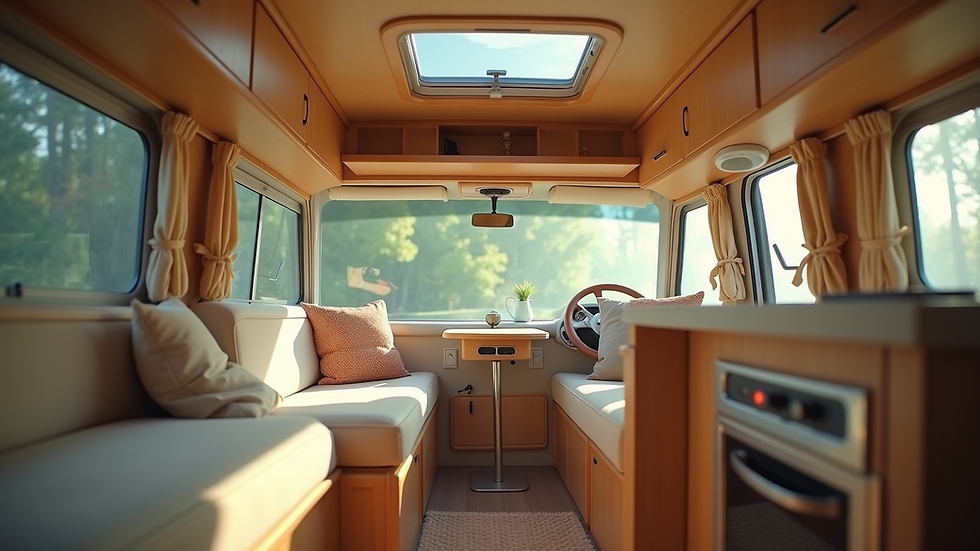
A bench that converts into a bed
Foldable tables and chairs
Storage compartments built into seating
This approach reduces the amount of material needed and keeps your camper light, which improves fuel efficiency.

How to Make Your Camper Conversion Budget-Friendly and Green
Eco-friendly doesn’t have to mean expensive! Here are some camper conversion tips to keep your wallet happy while staying green.
DIY as much as possible. Building your camper yourself saves labor costs and lets you choose sustainable materials carefully.
Shop secondhand. Look for used appliances, furniture, and materials at thrift stores or online marketplaces.
Plan your layout carefully. Avoid costly mistakes by sketching your design and measuring twice before cutting.
Invest in quality insulation and solar panels upfront. They pay off by reducing energy costs over time.
Use energy-efficient LED lighting. They use less power and last longer than traditional bulbs.
If you want a head start, check out the riverleaf camper con kits. They offer premium DIY conversion kits designed to be eco-friendly and budget-conscious, perfect for adventurers ready to hit the road sustainably.
Smart Tech and Appliances for Eco-Friendly Campers
Technology can make your camper conversion greener and more comfortable. Here are some camper conversion tips on choosing the right tech:
Energy-efficient refrigerators that run on 12V DC power.
Induction cooktops that use less energy and are safer than gas.
Portable composting toilets to reduce water use and waste.
LED lighting systems with dimmers to save power.
Smart battery monitors to keep track of your energy consumption.
Don’t forget to install USB charging ports powered by your solar system to keep your devices charged without draining your batteries.
Final Thoughts on Building Your Eco-Friendly Camper
Building an eco-friendly camper is a rewarding project that combines creativity, sustainability, and adventure. By following these camper conversion tips, you’ll create a mobile home that’s not only comfortable and functional but also gentle on the planet. Remember, every small choice—from the materials you pick to the appliances you install—adds up to a greener journey.
So, are you ready to roll up your sleeves and start your eco-friendly camper conversion? With a bit of planning, some smart choices, and a dash of enthusiasm, your dream camper is just around the corner. Happy converting and happy travels!



Comments